
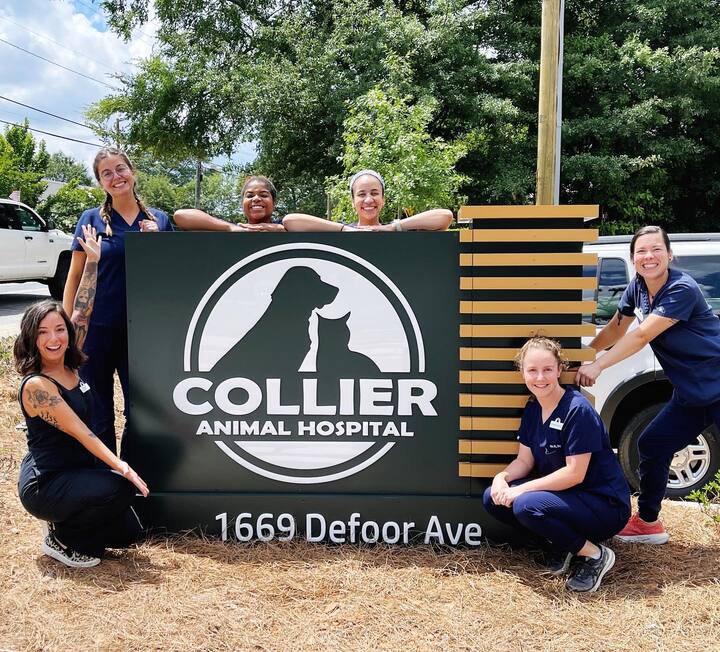
Founded in 2008 as a one-doctor practice in Atlanta, GA, Collier Animal Hospital has since expanded to five veterinarians, built and moved into a brand-new facility, and strengthened its role as a trusted community partner.
In 2024, Practice Manager and Ownership Partner Scarlett Fox, CVPM, helped lead another milestone: the opening of a second location in Serenbe, GA. The one-doctor hospital was created to fill a genuine care gap in a rapidly growing, close-knit community.
“It really feels like a true family vet,” Scarlett says. “People pop in just to say hi. You feel like you’re part of their pet’s life in a very real way.”
Behind the scenes, however, growth brought increasing operational complexity — particularly around inventory.
When Inventory Is Managed by Gut Feeling
Collier never had a chaotic inventory system. In fact, they had something many practices rely on: reorder tags, a dedicated inventory technician, and plenty of effort. The process functioned, but it relied heavily on the human factor.
“Once someone experiences a stockout, from that point on, you’re overstocked on everything,” Scarlett explains. “Nobody wants to feel like it’s their fault that we ran out of something.”
That emotional response is understandable. There were days when a vaccine would run out with a full schedule booked for it, forcing last-minute rescheduling and disrupting the client experience. After a situation like that, ordering tended to swing in the opposite direction — extra quantities, just to be safe. Months later, expired products would surface on the shelves.
“We’d find ourselves replacing expired items automatically,” Scarlett says. “Instead of stopping to think, ‘We didn’t use these — do we even need to replace them?’”
They tried relying on their PIMS for reporting — but manual receiving and disconnected data made it impossible to trust.
“The numbers were never totally right. If one person fell behind on receiving, someone else was ordering off inaccurate data. It was like we could never catch up.”
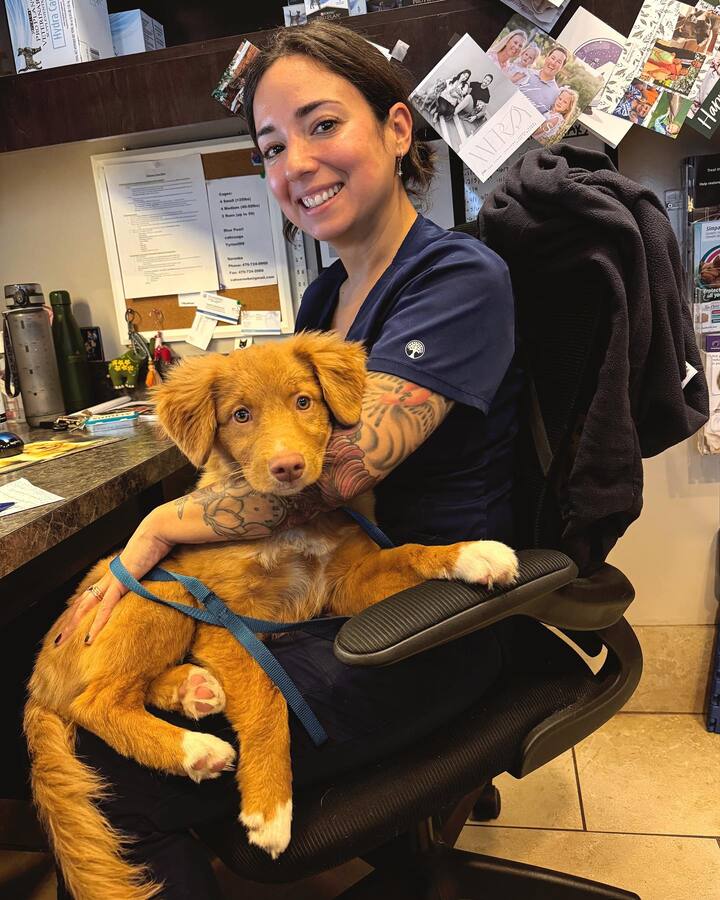
Meanwhile, technicians were spending roughly ten hours per week on inventory — counting, reconciling, and ordering — all while still carrying their clinical responsibilities.
“It’s a lot of pressure,” she says. “You’re being asked not to run out of anything, but also not to overspend. That’s a tough balance without a smart system supporting you.”
Enter the “Employee” Who Never Leaves
Scarlett first learned about Inventory Ally through VMG, where it was introduced as a preferred partner. Inventory management had long been a low-level operational stressor, and the idea of an algorithm-driven system immediately resonated.
“I truly view Inventory Ally as our new employee,” she says with a smile. “It’s getting to know our system. We’re getting to know it. It’s always learning. And it’s not going to leave!”
That consistency mattered as much as the technology itself. In the past, every change in inventory leadership meant some degree of reset. Processes evolved with personalities. Knowledge lived in individuals.
Unlike a person, the system does not react emotionally. It evaluates order history, consumption patterns, and replenishment cycles, adjusting recommendations as the practice evolves.
“With Inventory Ally, we don’t have to worry about starting over in five years if someone moves on,” Scarlett explains. “The framework stays in place.”
Onboarding That Builds Confidence and Engagement
Implementation was straightforward. Collier launched Inventory Ally at its Atlanta location in July and expanded to the Serenbe hospital the very next month — a reflection of how quickly the team saw its potential.
“The onboarding process was really smooth,” Scarlett says. “Our customer success manager provided regular check-ins, and the built-in chat feature made it easy to get quick answers. We felt we had a support team truly invested in our success.”
The dashboard itself became a tool for engagement. Instead of simply placing orders, the team began understanding the story behind their numbers.
“You can drill down into the data so easily,” she says. “It’s not just helping us shrink COGS — it’s helping us understand them.”
Meaningful Results, Measurable Impact
Since implementing Inventory Ally, the Atlanta location has seen clear improvements:
📉 COGS: 25.6% → 20.3%
Beyond the percentage drop, the team now feels they understand their COGS — not just see them.
📈 Profit Improvement: ↑ $200,000
Reducing COGS by 5.3 percentage points translated into approximately $200,000 in improved profitability, achieved simply by eliminating waste and optimizing replenishment.
📦 Inventory on Hand: ↓ $16,500
By removing emotional ordering and trusting real consumption data, shelves became leaner — without increasing stockouts.
⏱ Inventory Time: 10 Hours → 5 Hours Per Week
That’s five technician hours freed up every single week.
At the smaller Serenbe location, the time savings are even more significant. With just one doctor and one to two technicians, every hour matters.
“Her time is very valuable,” Scarlett says of her technician there. “The less she’s stressed about counting and ordering, the better.”
And because the two hospitals occasionally transfer products between them, having a workflow to track that movement has added another layer of control.
From Reactive to Intentional
One feature Scarlett particularly appreciates is the Want List. In the past, a technician might assume something was out and request an order immediately. Now, the system prompts a second look.
“It will say, ‘Are you sure? I show two in back stock,” she explains. “That pause changes behavior.”
White goods, often overlooked in traditional systems, are automatically incorporated into quarterly counts. Nothing stays hidden for long. The system touches every area of the hospital on a predictable cycle.
Even ordering patterns have improved. While the team is still refining their cadence, reactive same-day ordering has declined significantly.
“It’s not perfect yet,” Scarlett says. “But we’re moving in the right direction, and the system gives us confidence in that direction.”
Building Resilience in a Changing Economic Environment
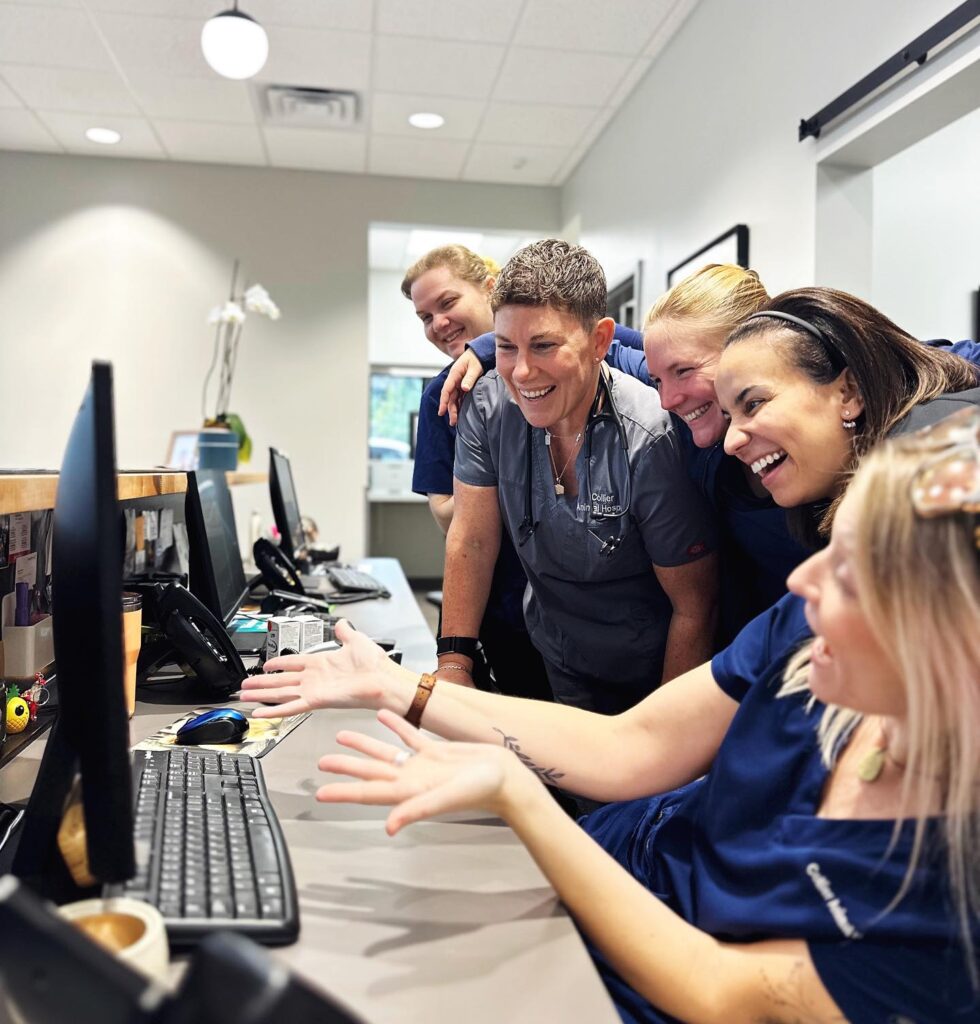
For Scarlett, Inventory Ally’s value extends beyond operational efficiency. In a climate where visits have softened and expenses continue to rise, resilience has become a central priority.
“We’re feeling the squeeze like everyone else,” she says. “Prices are up. Visits are down. You have to look carefully at where you can cut costs.”
Inventory optimization offers a rare advantage: meaningful savings without sacrifice.
“This is cost reduction without giving anything up,” Scarlett explains. “We’re not cutting staff. We’re not cutting care. We’re just ordering smarter.”
As the profession continues evolving, Scarlett believes practices benefit from systems that grow smarter over time and create long-term consistency.
“You want something that’s going to get more refined, not more complicated,” she says. “Inventory Ally does that.”
For Collier Animal Hospital, what began as an operational improvement has become a strategic asset — a reliable system that learns, supports the team, and stays steady no matter how the environment shifts.
Transform Your Inventory Management
Reduce inventory costs, save time, and minimize stockouts