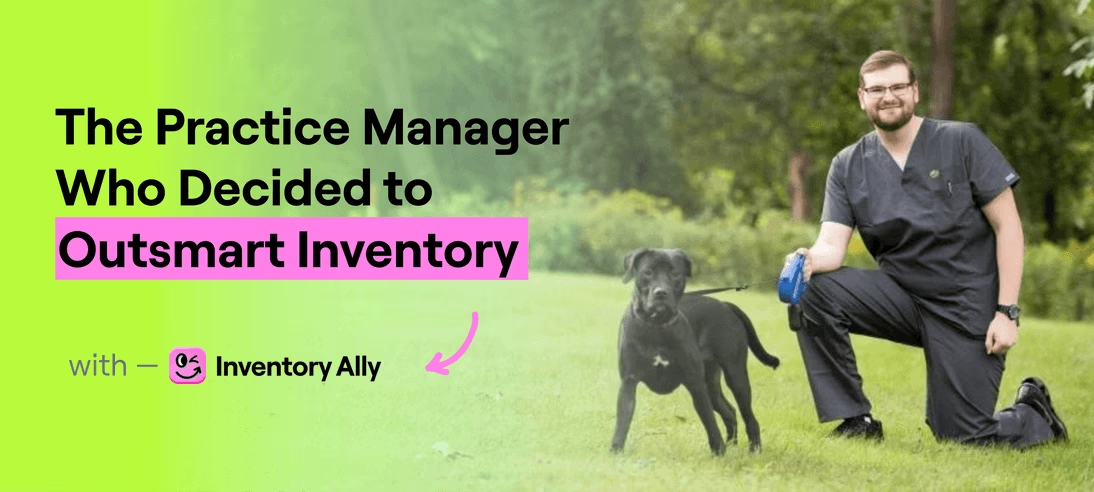
Pleasant Valley Veterinary Clinic in McMurray, PA, has been open since 1974, first under Dr. James Carmichael and, since 2008, under his son, Dr. Brad. Some clients have been coming for decades, and now their children and grandchildren bring in pets of their own. It’s grown into an eight-doctor general practice that stays close to its community, whether that’s a holiday photo event they call Grinchmas or a Red Cross blood drive.
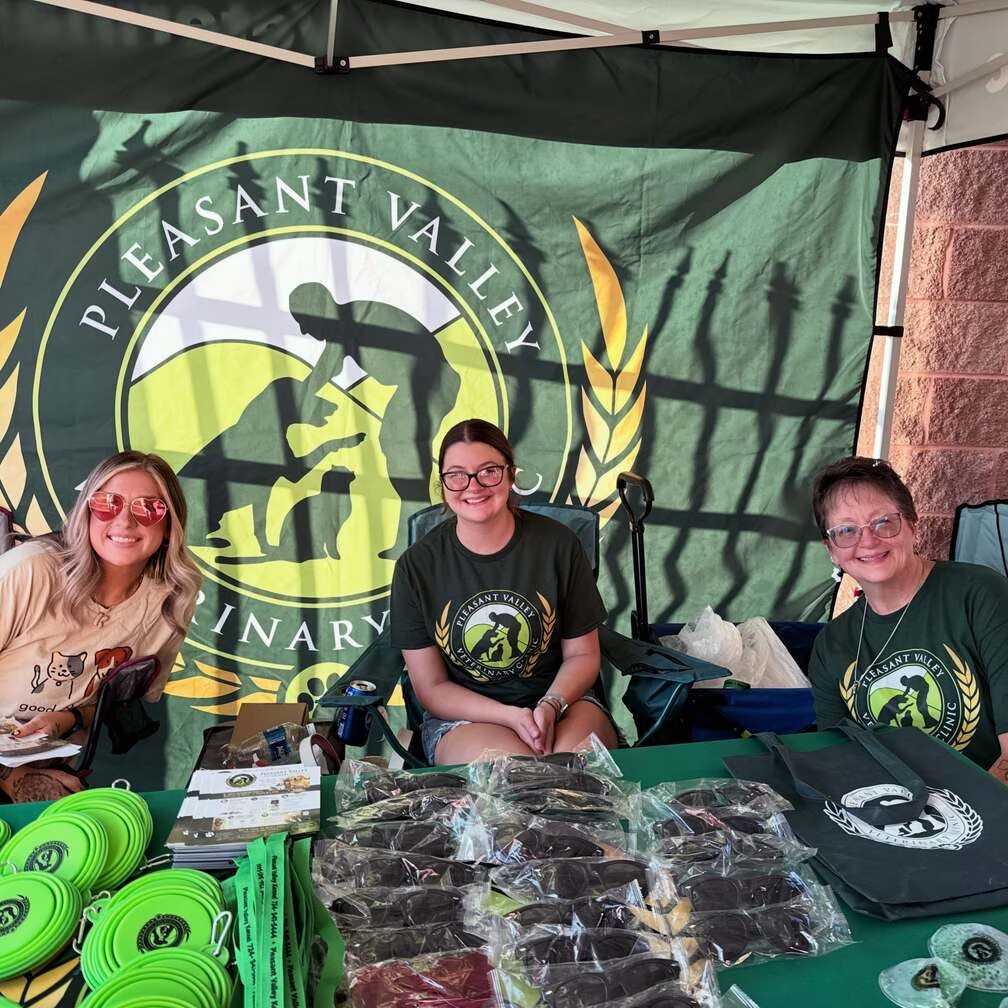
Chris Phillips, CVT, Practice Manager at Pleasant Valley, joined the team ten years ago as a technician, not long out of school. When he first became responsible for inventory, it meant checking the shelves every couple of days and ordering what looked low. But the hospital kept growing, along with its formulary. Eventually, Chris was spending more than 15 hours a week counting, checking, unboxing, updating lists, and keeping roughly 1,500 products moving through the hospital.
Inventory had become more than another task on his list. It was a puzzle he became determined to solve.
Inventory in a Service Business
Before entering veterinary medicine, Chris had worked with two small sandwich shops at Philadelphia Airport. There, demand was comparatively easy to understand: products had short shelf lives, they moved quickly, and yesterday’s sales gave you a pretty good idea of what tomorrow required.
Veterinary medicine played by different rules.
“You might have a week where you use three ear cleaners, and the week after you might use 50,” Chris says with a laugh. “You never really know what’s going to be used. It’s really just a matter of what shows up on the schedule and the luck of the draw.”
There was no formal system in place when he took over, and the practice management software wasn’t built to carry the weight.
“Anybody in the veterinary field knows PIMS inventories are notoriously wrong,” Chris says. “There was always a disconnect. I’d do the orders, but someone else was entering the invoices. If you try to use those numbers before all the invoices are in, you’re making decisions on information that isn’t true.”
So he relied on a good old spreadsheet. Three full pages, printed in columns of small type, that he carried around the hospital to check what needed to be ordered. It worked, and the shelves stayed full. What the spreadsheet couldn’t tell him was how much was enough, so Chris leaned toward carrying extra, which sometimes meant more money sitting on the shelves than the practice needed there.
“It’s better to have it when you need it, because otherwise you’re missing out on that sale, or you’re missing out on helping that patient,” he explains.
A Puzzle with High Stakes
Becoming Practice Manager gave Chris a fuller view of the finances, and the question shifted from Do we have what we need? to What does keeping it here cost the business?
By then, weekly purchasing that had once been around $9,000 had grown to roughly $40,000 as the hospital expanded. Chris began digging deeper into COGS, product mix, pricing, and how inventory decisions affected the rest of the practice.
COGS became the number he wanted to move, and he went searching for answers. “I took CE courses from VMG, did a lot of research, listened to veterinary finance podcasts,” he says, including several with Inventory Ally co-founder Emmitt Nantz. “I was looking for little tips and tricks I could use to make things smoother at my practice. How can I shave off a little bit here, a little bit there?”
Finding One Tool for a Thousand Little Pieces
What he kept running into was that there was no single answer.
“I always wanted the big answer,” Chris says. “And there’s never really a big answer, because it’s always a million different little things. But that’s why I came to Inventory Ally. It was this one big thing that handled all the little things.”
Chris admits that the hardest part was learning to trust the system. “The longer we used it, the more accurate it got, both at predicting demand and at picking up our own preferences,” he says. “And I never had to figure it out alone. Every time something needed fine-tuning, the Inventory Ally’s customer success team worked it out with me.”
Part of what built his confidence was understanding where the replenishment recommendations come from. “Inventory Ally takes your PIMS data, takes your purchasing orders, and your physical counts,” Chris says. “So you have these three bodies of decision-making working together, giving you a precise picture of what’s on hand and what needs to be restocked.”
As a VMG member, Pleasant Valley’s negotiated pricing, deals, and rebates come through already applied, so Chris isn’t cross-checking anything by hand before he orders. Membership also gets the practice special pricing on the Inventory Ally subscription itself.
A Year of Results
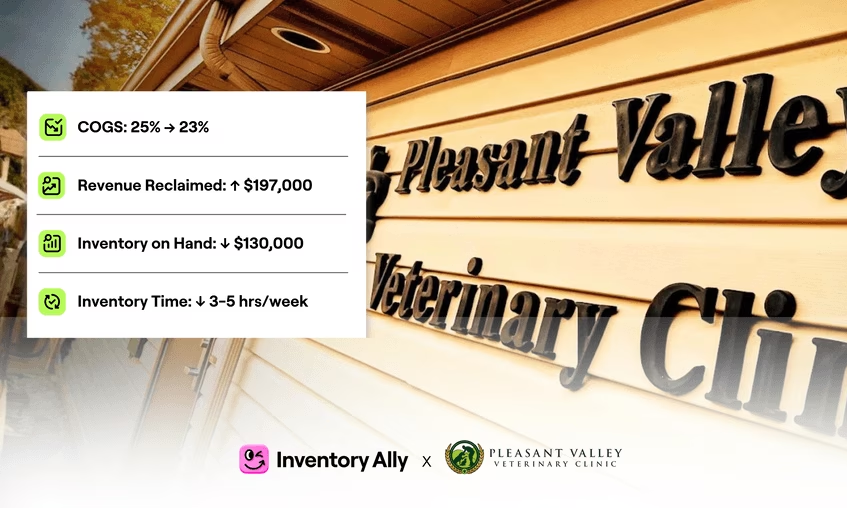
In the first year with Inventory Ally, Pleasant Valley’s numbers moved in every direction Chris had been pushing them:
📉 COGS Reduction: ↓ $197,000
Bringing COGS down from 25% to 23% translated into roughly $197,000 in savings so far.
📦 Inventory on Hand: ↓ $130,000
Pleasant Valley cut inventory carry by 52.8%, releasing roughly $130,000 in cash that had previously been sitting on the shelves.
⏱ Inventory Time: ↓ 3-5 Hours Per Week
More predictable replenishment recovered approximately 77 hours a year in ordering alone, giving Chris more time for higher-level practice management.
Altogether, every dollar spent on Inventory Ally came back $48.90 times over.
“The return on investment was a no-brainer,” Chris says. “I’d spend a couple hundred to save thousands. Who wouldn’t?”
Beyond the headline savings, what Chris values is being able to see things he couldn’t before.
Inventory Ally has helped him spot formulary redundancies that are hard to notice when managing nearly 1,500 items. A product may feel familiar simply because someone orders it every few months. Zoom out across the year, and the data may show that the hospital barely uses it.
“Everybody has feelings about stuff, but I’m a numbers guy,” Chris says. “And that’s what Inventory Ally gives me – data at my fingertips.”
Putting the Savings Back to Work
The savings show up on the shelves and in the P&L, but the effect Chris describes first is what came off his plate.
“I’m able to think less about the day-to-day ordering – Inventory Ally does that for me. Now I get to focus on higher-level questions: which products belong in the hospital, what should move online, how the team can support appointments more efficiently, and where the practice can improve next,” he shares.
Pleasant Valley has already used some of that breathing room to reinvest in the hospital and team. With the new savings, they’ve been able to give staff raises, host a big Christmas party, and take on building renovations and a new parking lot.
“It’s nice to see all your hard work paying off. You have this overall goal, you’re working on it day in and day out, and then you’re seeing it actually happen. Everybody likes when their goals are achieved,” says Chris with a smile.
And that’s the part worth holding onto. A practice’s second-largest expense got smaller because someone decided to outsmart it, and what came back went to the people and the practice they work in.